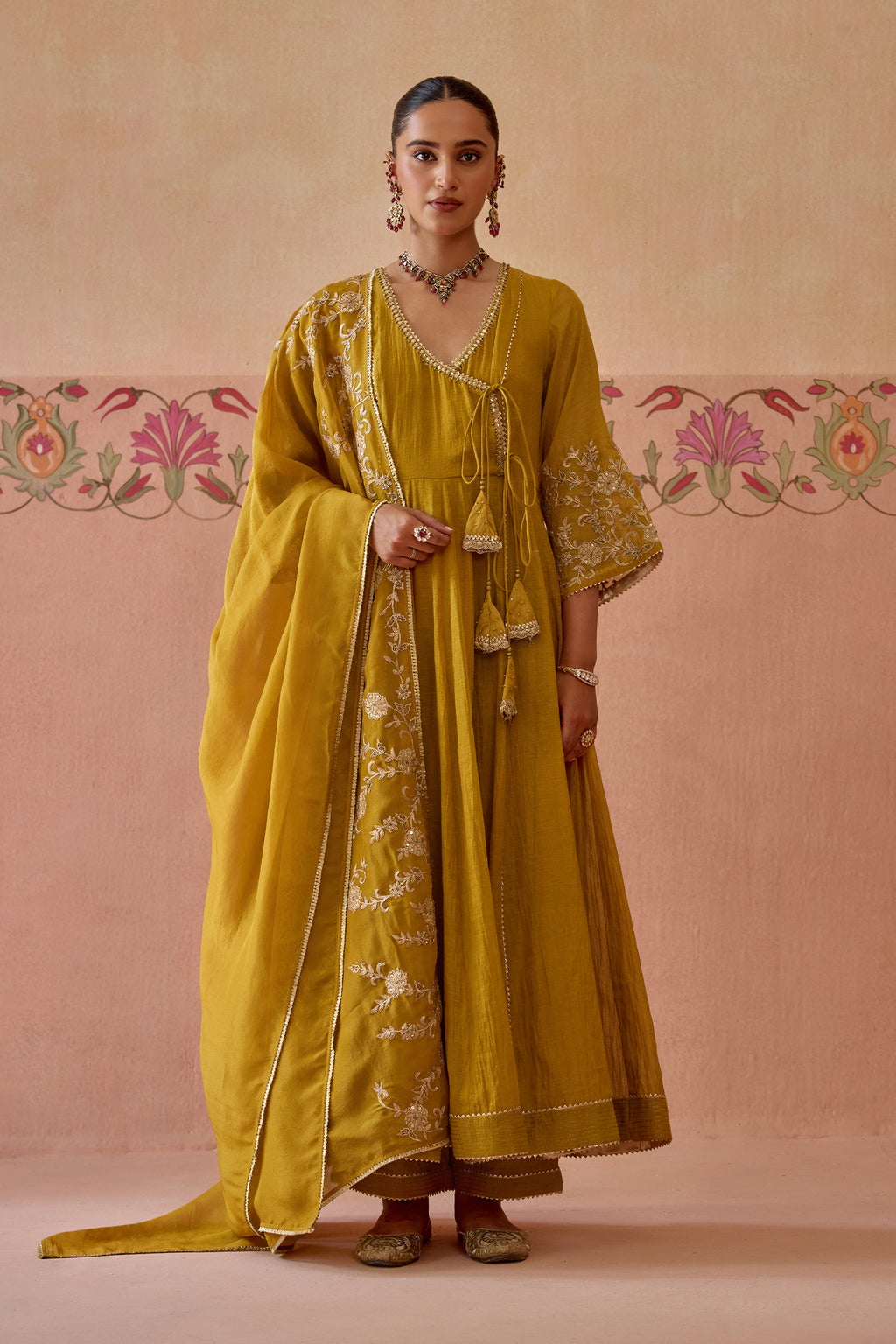
An Anarkali has a rare kind of presence. It moves with ceremony, photographs beautifully
and can feel traditional without belonging to another time. Yet finding the best
designer Anarkali brand in India requires more than choosing the prettiest outfit on a
screen.
The right Anarkali must suit your occasion, proportions, comfort and styling preferences.
Its product page should tell you what the outfit contains, which fabrics are used, how
long it is and when it will arrive. The brand should also be transparent about sizing,
customisation and returns.
The short answer: a dependable designer Anarkali brand should provide original design,
clearly stated fabrics, considered embroidery, a detailed size chart, customisation
support, realistic delivery timelines and transparent policies.
If you are comparing designer Anarkali suits online, ask the following questions before
placing your order.
1. Is the Anarkali Suitable for Your Actual Occasion?
Begin with the event rather than the colour. An outfit that works for a daytime mehendi
may not have the same presence at an evening sangeet or wedding reception.
For a daytime celebration, consider lighter colours, fluid layers and embroidery that
catches natural light without feeling excessive. Mint, yellow, coral and ivory can work
particularly well for spring and summer festivities. For an evening wedding, deeper
colours, metallic details, mirror work and richly embroidered surfaces tend to make a
stronger impression.
Also consider your role. A bride, bridesmaid, close family member and wedding guest will
require different levels of ornamentation. The best designer Anarkali brand in
India should help you shop by occasion rather than presenting every embellished
outfit as appropriate for every function.
For example, Kritika Dawar’s Falak
Anarkali Set combines a mint Chanderi Anarkali with bead embroidery on the yoke,
cotton trousers and an organza dupatta. Its lighter palette and three-piece construction
make it a considered option for daytime festive dressing.
2. Does the Product Page Clearly Identify Every Fabric?
Never judge fabric by photographs alone. Lighting, styling and image editing can make two
very different textiles appear similar on a screen.
Check the fabric used for each component—not only the Anarkali. The outer layer, lining,
trousers and dupatta may all be constructed in different materials. This affects the
outfit’s drape, weight, transparency, movement and care requirements.
Silk can lend a richer surface and ceremonial character. Chanderi offers a refined
structure with visual lightness, while organza creates an airy, translucent dupatta or
layer. Tissue can contribute lustre, and cotton trousers may make a multi-piece ensemble
more comfortable over several hours. These are general qualities; the experience will
still depend on weave, lining and garment construction.
The Seher
Anarkali Set, for instance, identifies silk for the yellow Anarkali and straight
trousers, with organza for the striped dupatta. This component-by-component information
is precisely what shoppers should expect when searching for a designer Anarkali dress
online.
3. What Kind of Embroidery Are You Paying For?
“Embroidered” is too broad a description for a designer purchase. Ask what technique has
been used, where it appears and whether the work is done by hand.
Dori, aari, zari, beads, sequins, thread and mirror work create markedly different
effects. Antique-gold dori and aari embroidery can produce an ornate yet tonal
appearance. Mirror and multicoloured thread work feel more expressive, while restrained
beadwork around a yoke can keep the rest of the silhouette visually light.
Placement is equally important. Dense work across the entire garment can add weight,
whereas embroidery concentrated around the neckline, yoke, borders or panels may create
definition while allowing the skirt to move freely.
Kritika Dawar’s Ivory
Metal Hand-Embroidered Anarkali Set features zari and metal hand embroidery,
accompanied by embroidered straight trousers and an organza-striped dupatta with
scalloped detailing. Such specific descriptions help buyers understand the craftsmanship
of an embroidered Anarkali suit instead of relying on broad decorative descriptions.
4. Is the Silhouette Designed for Movement as Well as Photographs?
An Anarkali should look beautiful when standing still, but it must also allow you to
walk, sit, dance and move comfortably through an event.
Look beyond the overall flare. Examine the neckline, sleeves, fitted area of the bodice,
waist placement and the point from which the panels begin to open. If the brand provides
the garment length, compare it with your height and planned footwear. An Anarkali that
appears floor-length on the model may fit very differently on you.
The accompanying pieces matter too. Straight trousers can offer a clean base beneath a
long silhouette. A jacket creates additional dimension but may also add warmth and
weight. A sheer dupatta can soften the composition, although you should check whether
its length and detailing will be manageable during the event.
The Inaya
Anarkali illustrates a more layered interpretation. It includes an embroidered
Chanderi jacket, a Chanderi inner with an embroidered yoke, cotton trousers and an
organza dupatta. Its four-piece construction suits someone seeking a more architectural
alternative to the conventional three-piece Anarkali.
5. Does the Brand Provide Garment Measurements or Only Body Measurements?
One of the most important questions when buying designer Anarkali suits online is also
one of the most frequently overlooked: what exactly does the size chart measure?
Body measurements indicate the wearer’s bust, waist and hip measurements. Garment
measurements indicate the finished dimensions of the outfit. These are not
interchangeable because the garment needs an appropriate amount of ease. A fitted bodice
may require a different degree of ease from a softly structured kurta.
Measure yourself in the undergarments you plan to wear and keep the tape comfortably
level. Compare your bust, waist and hip with the brand’s chart, but also ask about
shoulder width, armhole, sleeve opening and garment length if these figures are absent.
Size availability and measurements vary by design. Shoppers should consult the size guide
displayed on the selected product page and confirm any special requirements before
ordering.
6. Can the Anarkali Be Customised for You?
Customisation can turn an attractive outfit into one you will genuinely enjoy wearing.
Ask whether the brand can adjust the colour, neckline, sleeve, length or individual
components of the set.
This is especially useful when you prefer greater coverage, need a length suited to your
height or want a colour aligned with a wedding theme. Some shoppers may need the
complete set, while others may already own suitable trousers or would like to add a
dupatta.
However, customisation should never be assumed. Confirm which changes are possible,
whether they involve an additional cost and how they affect production time. Request
written confirmation before paying.
The Kritika Dawar product pages state that selected customisation requests may be
considered, subject to design feasibility, additional charges and confirmation from the
brand. The brand also identifies its pieces as made to order. This degree of flexibility
is an important consideration when deciding what constitutes the best designer Anarkali
brand in India for your individual needs.
7. Is the Colour and Embellishment Right for the Time of Day?
Colour should support the mood of the occasion as well as your personal style.
Yellow and mustard are naturally suited to celebratory daytime dressing, particularly
haldi and pre-wedding functions. Mint and ivory offer a softer visual language, while
coral brings warmth without relying on traditional red. Maroon creates a deeper, more
ceremonial effect and works especially well with metallic, mirror or multicoloured
embroidery.
For a richer wedding option, the Maroon
Multi Thread Embroidered Anarkali Set brings together multicoloured thread and
mirror embroidery, trousers and a tissue dupatta with metal hangings. The combination
gives it a distinctly festive character.
Remember that colours may appear different across screens and lighting conditions. If an
exact match is important, request an unfiltered video or arrange a video consultation. A
responsible seller should also disclose that handcrafted colours, patterns or textures
may vary slightly between pieces.
8. What Exactly Is Included in the Listed Price?
Never assume that every visible element in a styled photograph is included. Earrings,
belts, potlis and footwear are usually styling accessories. Even the trousers or dupatta
may occasionally be excluded unless the product description states otherwise.
Before buying, confirm:
- The number of components
- The fabric of each component
- Whether a lining is included
- The embroidery technique and placement
- Garment and trouser lengths
- Whether accessories are part of the set
- Any customisation charges
- Shipping fees and applicable duties
The Noorza
Anarkali Set is clearly identified as a three-piece ensemble: a coral silk
Anarkali with antique-gold dori and aari embroidery, straight trousers and a tissue
dupatta. Details like these make product comparisons far more meaningful than comparing
prices alone.
9. Will the Outfit Arrive Before Your Event?
Designer and handcrafted clothing frequently requires more preparation time than
mass-produced fashion. “In stock” and “made to order” are not the same, and an estimated
dispatch date is not necessarily the final delivery date.
Ask the brand:
- Is the selected size ready to ship or made to order?
- Is the stated timeline for dispatch or delivery?
- How much time does customisation add?
- Is urgent delivery available?
- Will tracking information be provided?
- Could international customs delay delivery?
Dispatch timelines vary by product, size and customisation. Shoppers should check the
estimate shown on the live product page and confirm delivery feasibility before ordering
for a fixed event.
Whenever possible, leave a buffer for delivery, trial, styling and any alteration. The
loveliest Anarkali in the world is of little use if it arrives after the music has
faded.
10. Have You Read the Return and Alteration Policy?
This may be the least romantic part of shopping, but it is one of the most important.
Made-to-order, customised and sale garments may be non-returnable. A brand may provide
alteration assistance without offering a refund or exchange. International buyers may
also need to pay return shipping if an alteration is required.
Read the policy before checkout and save a copy of the product description, measurements
and agreed customisations. If any clause is unclear, ask for confirmation in writing.
Kritika Dawar’s current product pages state that made-to-order garments are not eligible
for returns, exchanges or refunds, although alteration assistance may be available.
Return, exchange, alteration, care, shipping and import-duty conditions are subject to
the policies applicable at the time of purchase. These should be reviewed before
checkout.. Check the latest policy at the time of purchase because commercial terms can
change.
Kritika Dawar Anarkalis to Consider
For shoppers exploring the latest designer Anarkali suits, these six designs combine
selected pieces from the Paigaam
collection with other Kritika Dawar Anarkalis. They cover different colours,
fabrics, embroidery techniques and festive occasions.