


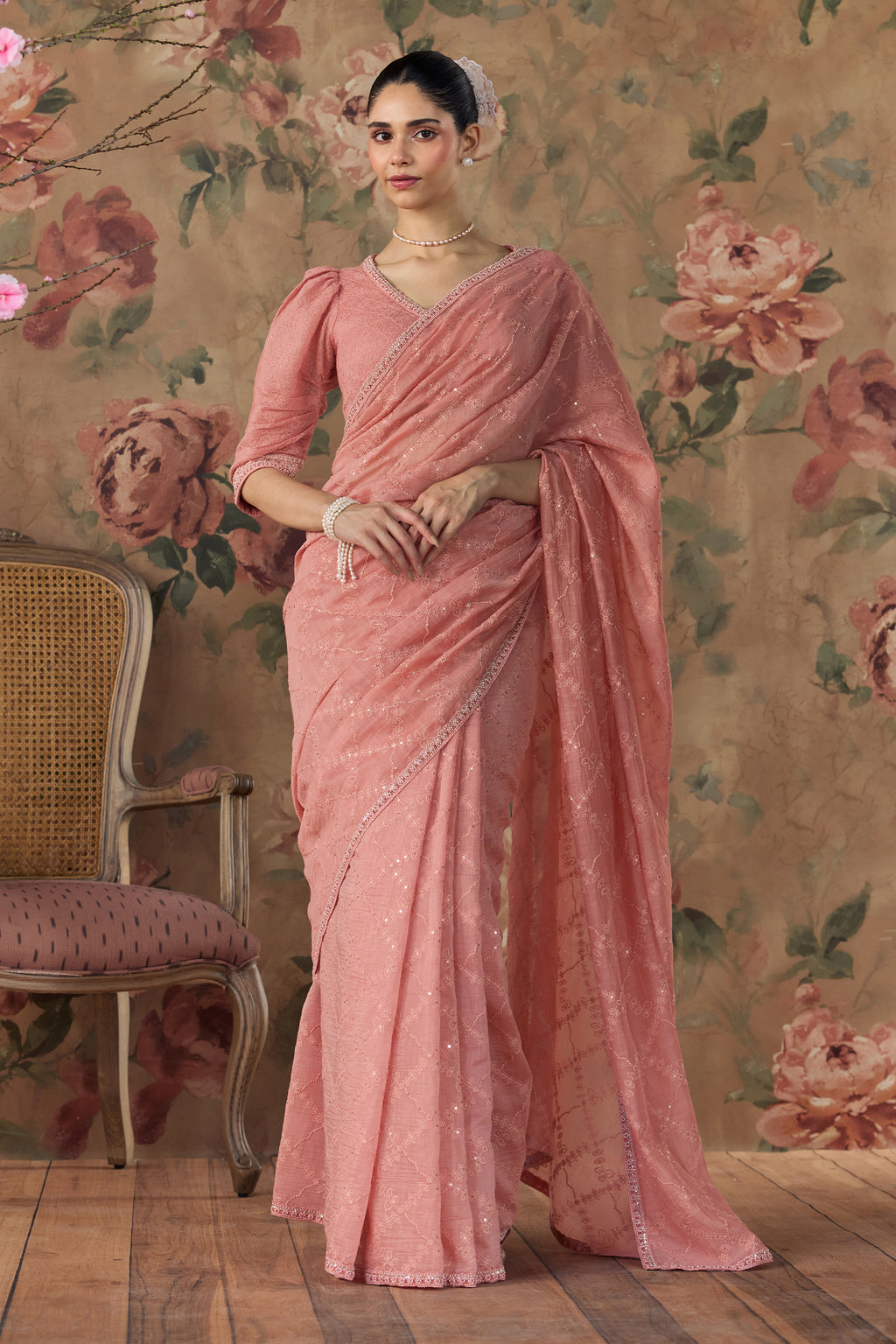
1. Chandani Saree Set — The One That Needs No Explanation
The saree has been the go-to traditional dress for karwa chauth for generations, and there's a straightforward reason it hasn't been replaced — a well-draped saree in the right fabric catches candlelight in a way that other silhouettes don't. The Chandani Saree Set has the handcraft detail that Kritika Dawar brings to all its occasion pieces: intricate work that reads clearly in the warm, low light of a festive evening.
It's also, practically speaking, the answer when you're not sure what's expected of you. A saree at karwa chauth is never questioned.
Best for: Women who've worn sarees before and are comfortable managing the drape through a long evening. Also the default choice when extended family has opinions about what karwa chauth dressing should look like.
Styling note: Pin the pallu at the shoulder — hands free for the thali. A sleek low bun with gajra, a gold choker, bold red lip. Predictable for a reason.
2. Noorza Anarkali Set — The Karwa Chauth Special Dress You Put On and Forget About
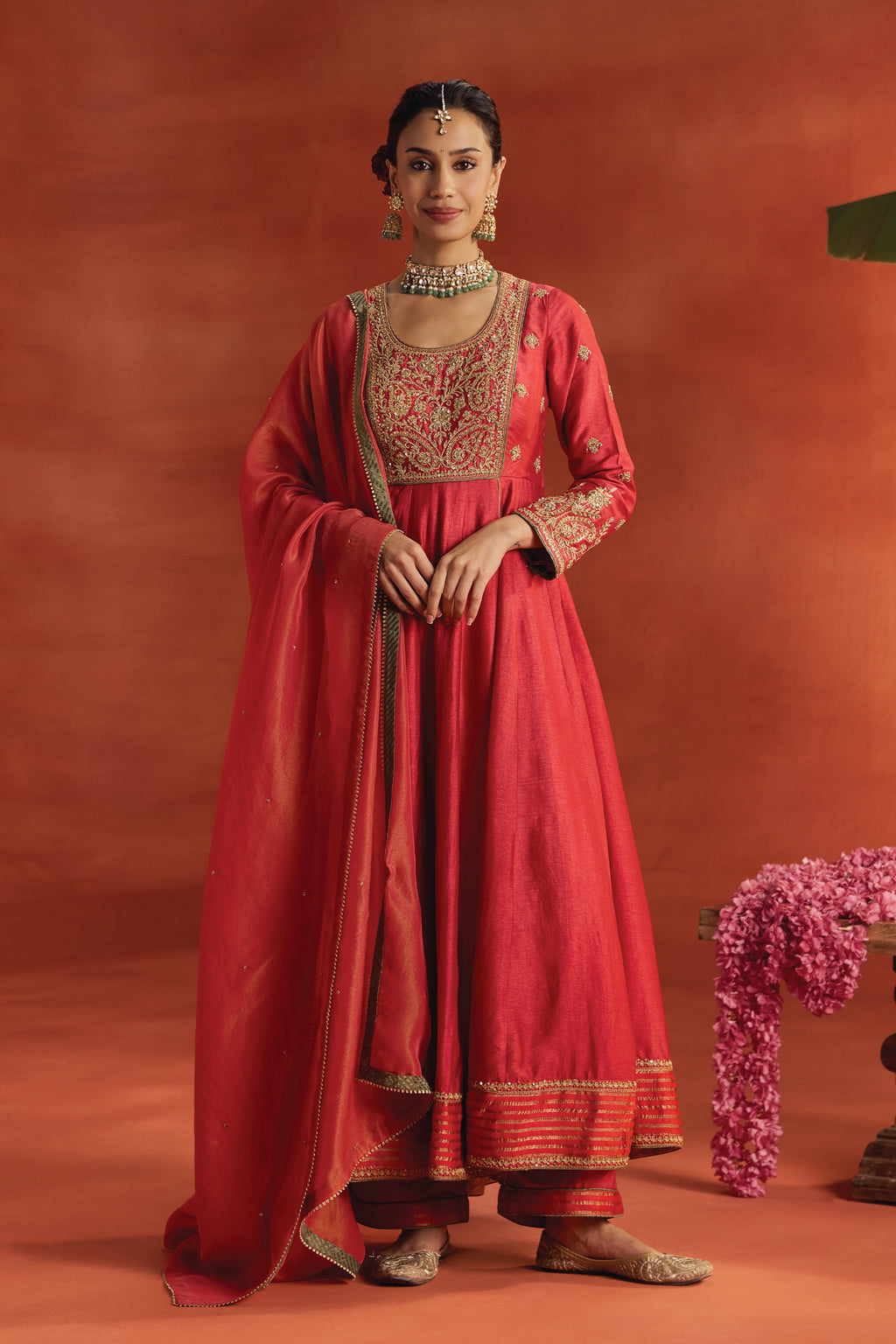
Coral. 52 inches floor-length. Silk with antique gold dori and aari embroidery. Tissue dupatta. The Noorza is the karwa chauth special dress for the woman who wants to look considered without spending the evening managing what she's wearing.
The anarkali solves the comfort problem simply — no waistband, no draping, nothing to adjust. You put it on before the puja and it looks the same at dinner. Coral sits in a useful spot for this occasion: it reads festive without defaulting to predictable red, and it photographs particularly well in the warm, low light that defines karwa chauth evenings. Antique gold embroidery in diya light doesn't need help from filters.
Best for: Anyone with a long evening ahead — puja through to a late dinner — who doesn't want to think about the outfit again once they're dressed. Also genuinely practical if you tend to run warm and find lehengas physically tiring after a fasting day.
Styling note: The anarkali carries volume at the bottom. Keep the top half clean — chaandbalis or long polki drops, no necklace, hair up or pulled back.
3. Samaira Lehenga Set — For a First Karwa Chauth, or Whenever You Want the Room
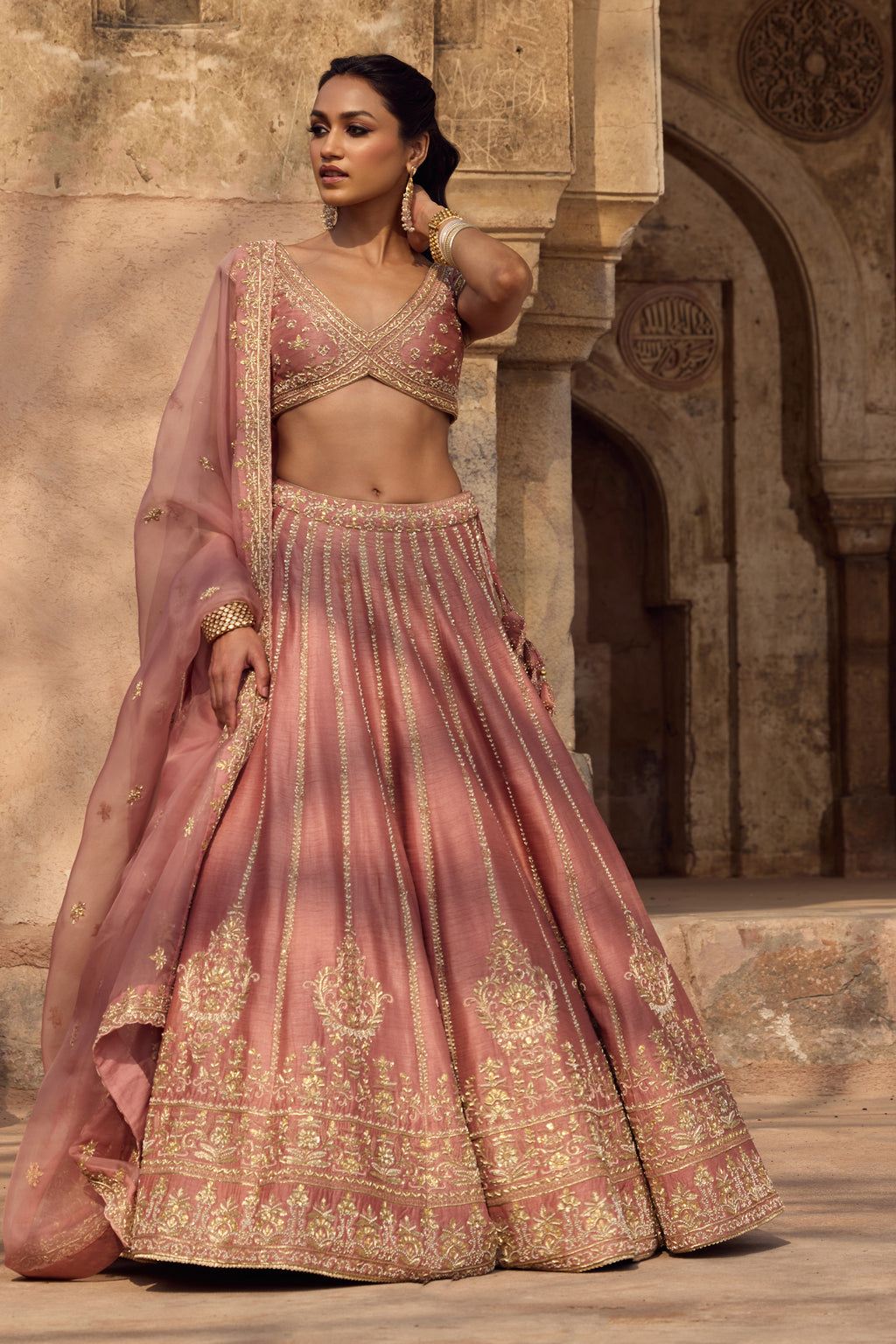
Blush silk. Dabka, Zardosi, and Pearl embroidery on the lehenga, blouse, and hand-embroidered organza dupatta. The Samaira is the karwa chauth dress for a first festival, or for anyone who simply wants the most impact in the room.
The craft here is bridal in its seriousness — weeks of handwork, visible in person and in photographs. But it's not a bridal lehenga. It's calibrated for a married woman dressing for a significant occasion rather than a wedding, which is a different register and the Samaira lehenga set gets it right. The skirt moves with you rather than against you, which matters more than it sounds after a full day of fasting.
Best for: Newlyweds, first karwa chauth celebrations, larger formal gatherings where the lehenga is clearly the right call.
Styling note: Pin the dupatta over one shoulder — hands free for the thali. Polki or emerald jewellery. Maang tikka. Glass bangles over the mehndi.
If you plan to wear your lehenga from the morning pooja until the moonrise, read our complete guide on Day-to-Night Transition Looks.
4. Zubeida Sharara Set — For the Woman Who's Done With Lehengas
The sharara is having a real comeback — not the trend-cycle kind, but the quieter kind where people return to something that was genuinely good. It's traditional in reference, more comfortable than a lehenga across a fasting day, and considerably more modern in how it actually moves.
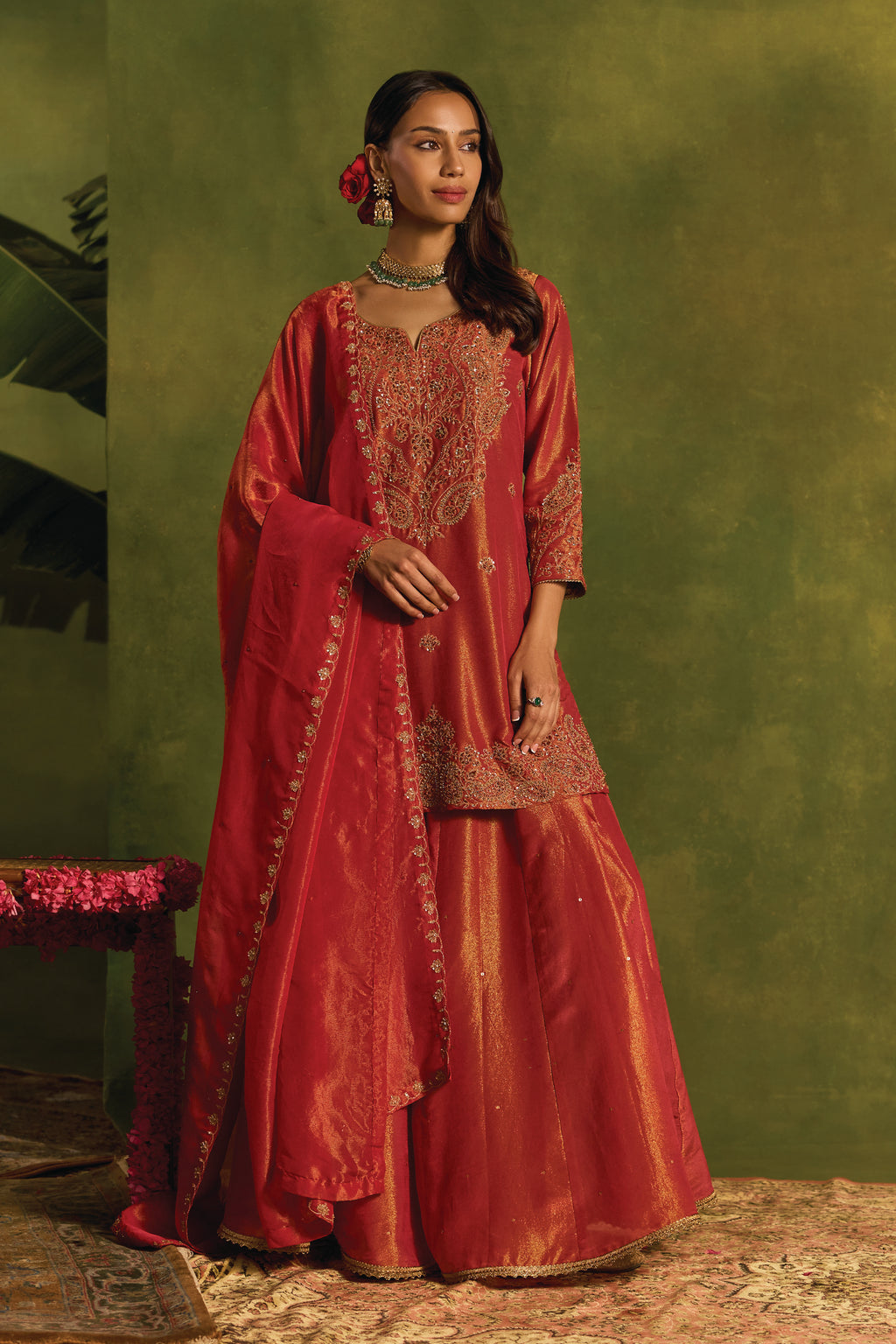
The Zubeida is coral tissue silk — a short embroidered kurta with antique gold dori work at the neckline, sleeves, and hem, with a tissue silk sharara and hand-embroidered dupatta. The embroidery sits where it catches light without adding weight to the overall garment. Wide-leg tissue silk means the airflow is real, not a fabric description.
Best for: Women who want a festive, considered look without committing to the full physical weight of a lehenga. Also genuinely practical for anyone managing children or hosting at home — the sharara moves freely in a way that matters when you're actually doing things.
Styling note: Potli bag, embellished juttis, soft waves. The sharara is playful — the accessories work better when they follow that rather than trying to make it formal.
5. Erum Gharara Set — The Most Overlooked Karwa Chauth Dress Silhouette
The gharara — fitted at the knee, dramatically flared below — comes from Lucknawi court dressing and it has a presence in photographs that most silhouettes don't. It's also the most overlooked choice at karwa chauth gatherings, which is partly what makes it worth considering.
The Erum is hand-embroidered throughout, consistent with Kritika Dawar's made-to-order standard. The knee-gather creates a natural hourglass shape that flatters most body types. If you're tired of karwa chauth gatherings where everyone is wearing a variation of the same thing, the gharara is the answer — it's traditional enough that no one questions it and distinctive enough that people remember it.
Best for: Women who want heritage craft and a silhouette that photographs differently from the standard options. The right choice if you want to stand out without the lehenga scale or budget.
Styling note: A traditional paasa or oversized jhumkas lean into the Nawabi reference the silhouette carries. Let it do the work — the accessories are there to frame it, not compete.
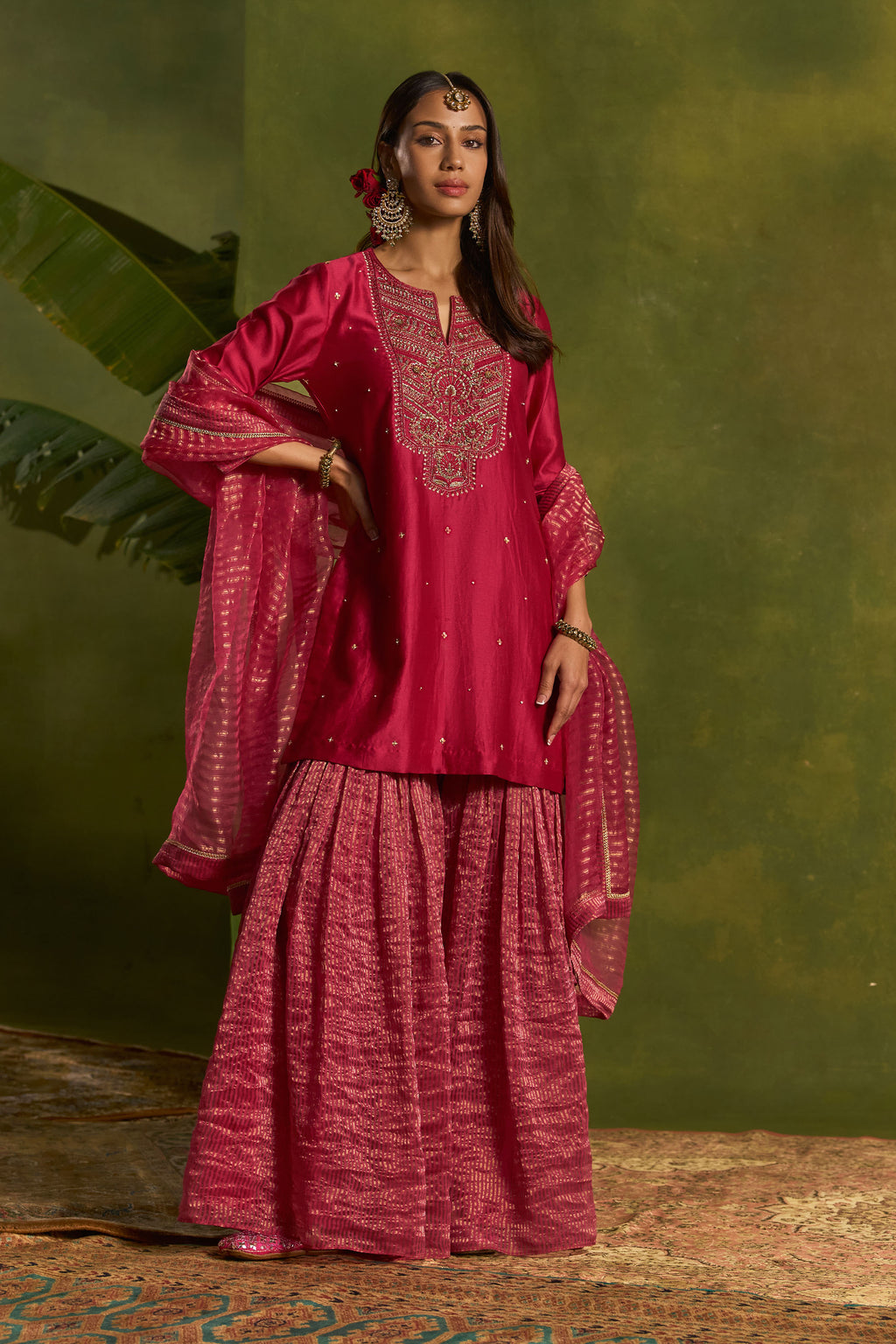
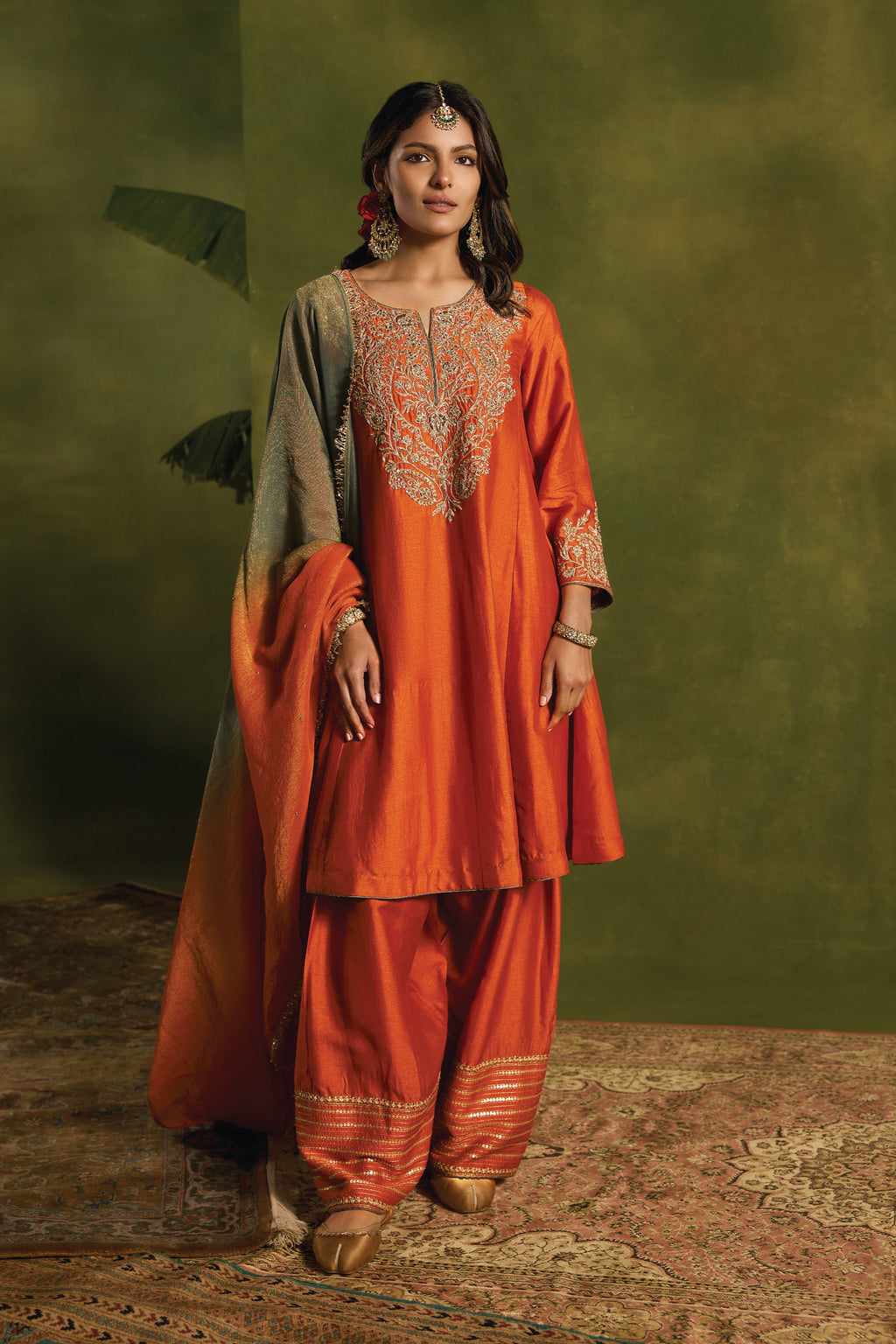
6. Roohani Choga Set — The Karwa Chauth Dress Nobody Else Will Show Up In
The choga is a long open-front jacket layered over a kurta and bottom — a Mughal-era silhouette that Kritika Dawar has brought into contemporary Indian occasion wear. It's the practical answer to wanting to look intentionally festive without wearing a silhouette you've worn before.
The Roohani is particularly well-suited to intimate home gatherings — it doesn't need a large formal setting to read correctly the way a lehenga does. The layering gives it occasion-appropriate structure without formality. And because every Kritika Dawar piece is customisable — colour, neckline, specific embroidery elements — the Roohani choga set can be adjusted around a jewellery set or family colour theme before ordering.
Best for: Intimate karwa chauth celebrations, women who genuinely want to wear something different, anyone who finds the standard ethnic occasion silhouettes predictable year after year.
Styling note: Statement Polki or Kundan necklace against the clean choga silhouette. Fresh, light makeup rather than dramatic. The layering is already doing a lot — the jewellery is the counterpoint, not the headline.
Colour: What Actually Works in Karwa Chauth Evening Light
Red and maroon are traditional for straightforward reasons — they're auspicious, they read festive immediately, and they work with gold jewellery in low diya light in a way that most other colours don't match. If your family has a colour expectation, that's the starting point.
If you have flexibility: coral is the most consistently successful non-red choice for this occasion — both the Noorza and Zubeida use it because it photographs well in warm evening light. Blush reads bridal and works best for newlyweds celebrating their first karwa chauth. Jewel tones — emerald, deep magenta, sapphire — contrast with gold jewellery in a way that makes both look better. Ivory is tricky; it works only when the embroidery is heavy enough to carry the colour, because in candlelight alone it can go flat.
One thing most people don't account for: colours look different in diya light than they do in daylight or studio photography. Warm tones — red, coral, blush, mustard — deepen and become richer. Cooler tones can go dull. Gold and copper embroidery responds to the warm light in a way that silver doesn't. It's worth keeping in mind when choosing from product photographs taken in studio conditions.


