


Ivory — The Quietly Breathtaking Choice
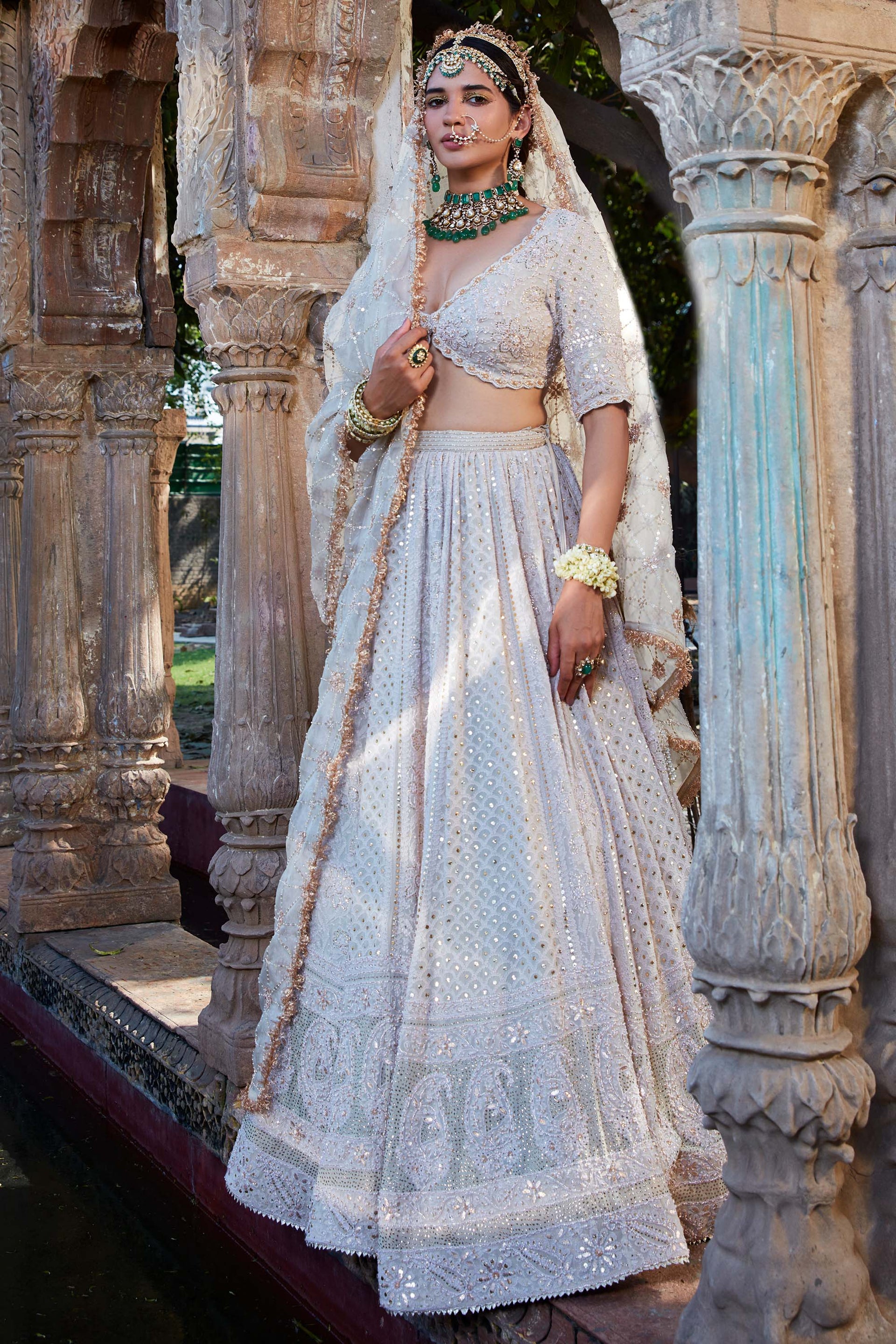
ivory chikankari lehenga is, for many brides, the most striking option of all — precisely because it is so restrained. The thread work is tonal, almost disappearing into the fabric until the light catches it, and then it is nothing short of luminous.
It is the kind of lehenga that makes people look twice. Not because it is flashy, but because there is something deeply refined about it that takes a moment to fully register.
- Ideal for daytime ceremonies, mehendi functions, and brides who photograph beautifully in natural light.
- Pairs effortlessly with antique gold jewellery, polki sets, or uncut diamond pieces — anything with a handcrafted, heirloom quality.
- Works across skin tones, but is particularly stunning on deeper complexions where the contrast between skin and fabric creates something almost painterly.
- Choose a sheer dupatta in the same ivory tone, or go for a soft gold tissue dupatta to add warmth without overwhelming the look.
- If you are planning an outdoor ceremony, ivory will keep you cooler than darker shades — an underrated but very practical advantage.
Pink — Romantic Without Being Predictable
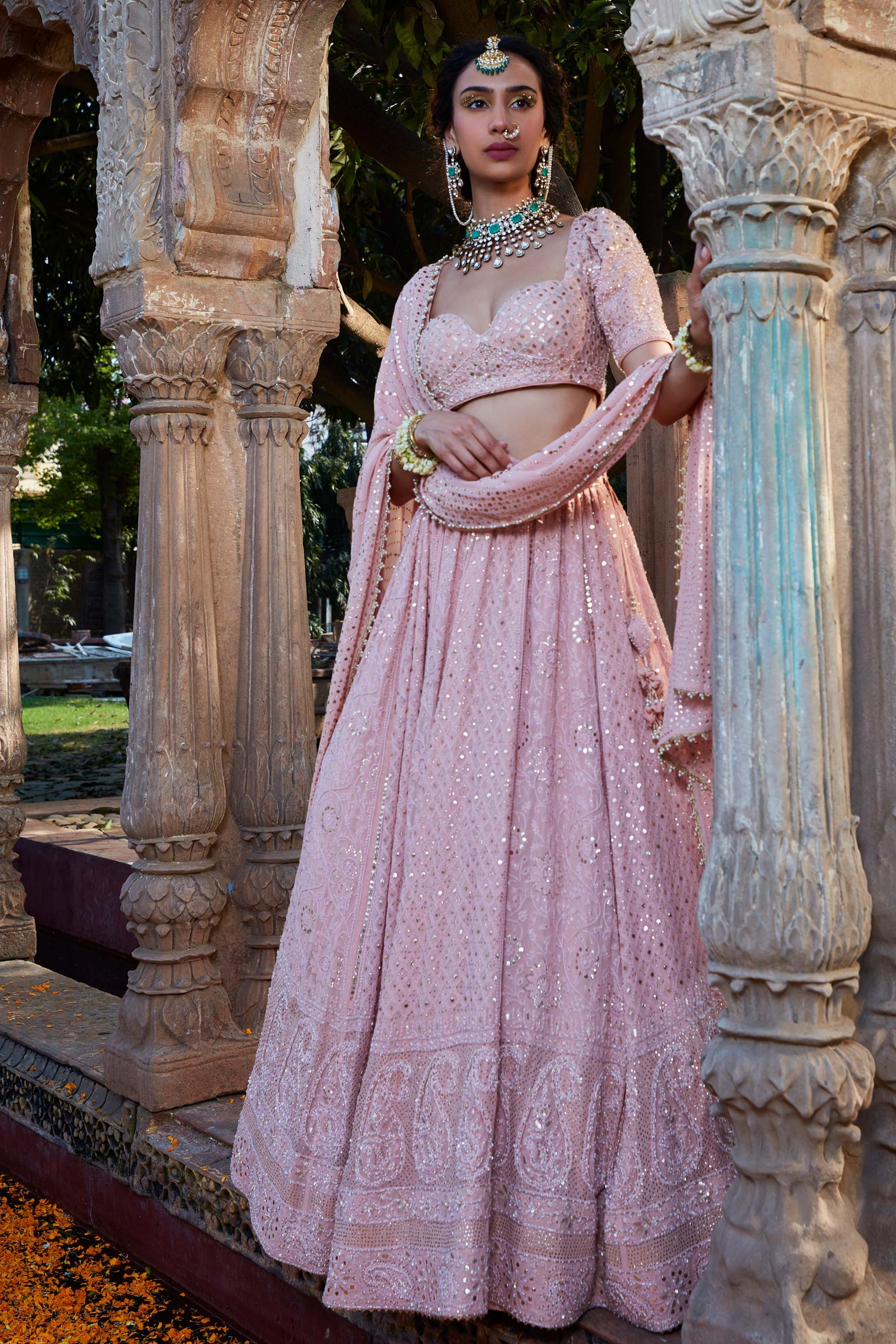
pink chikankari lehenga we are talking about here is the kind of pink that feels like a garden in the early morning — soft, warm, quietly romantic. The chikankari embroidery in white or off-white thread on a rose or blush base creates a tonal depth that photographs beautifully from every angle.
Pink sits in that interesting middle ground where it is traditional enough to feel bridal but contemporary enough to feel like a considered, personal choice rather than a default.
- Softer blush and pastel pinks work brilliantly for daytime functions — mehendi, haldi, or a morning ceremony.
- A deeper rose or rani pink is the right call for evening events like a sangeet or reception, where you want slightly more visual presence.
- This colour pairs naturally with rose gold jewellery, but also looks extraordinary with contrast — a deep emerald choker against a blush chikankari lehenga is a combination worth trying.
- Hair adorned with fresh flowers — jasmine, roses, marigolds — feels completely at home with a pink chikankari bridal lehenga.
- If you are unsure between ivory and pink, consider the lighting of your venue: pink adds warmth in cool-toned spaces; ivory sings in natural and golden light.
Yellow — Made for Celebration
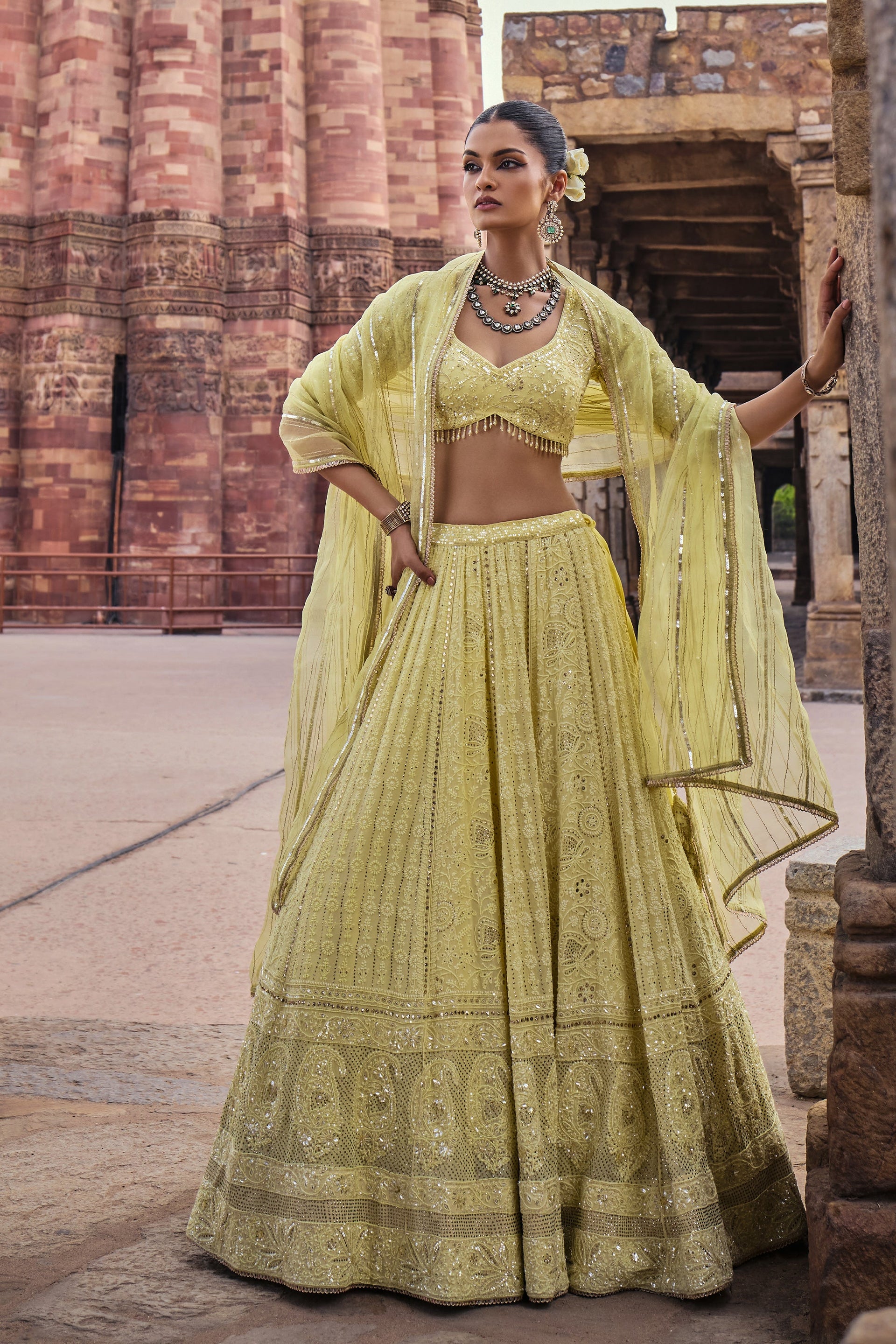
yellow chikankari lehenga captures all of this without resorting to the obvious. The chikankari embroidery in white thread on a golden or mustard yellow base looks almost like sunlight has been stitched directly into the fabric.
It is festive, warm, and deeply human — the kind of colour that makes everyone around you feel happy simply by being in the room.
- The natural choice for a haldi or mehendi function, where yellow is already part of the ritual and the colour feels completely at home.
- A muted, golden yellow is more versatile than a bright canary — it works across more occasions and photographs more warmly.
- Pair with terracotta or burnt orange accessories for a festival-inspired look, or keep it clean with gold and cream for something more refined.
- Yellow chikankari is especially flattering on medium to deeper skin tones, where the warmth of the colour creates a genuinely radiant effect.
- If you want to wear yellow to the main ceremony, opt for a richer shade with denser embroidery — it reads as fully bridal rather than simply festive.
Grey — For the Bride Who Does Not Follow the Script
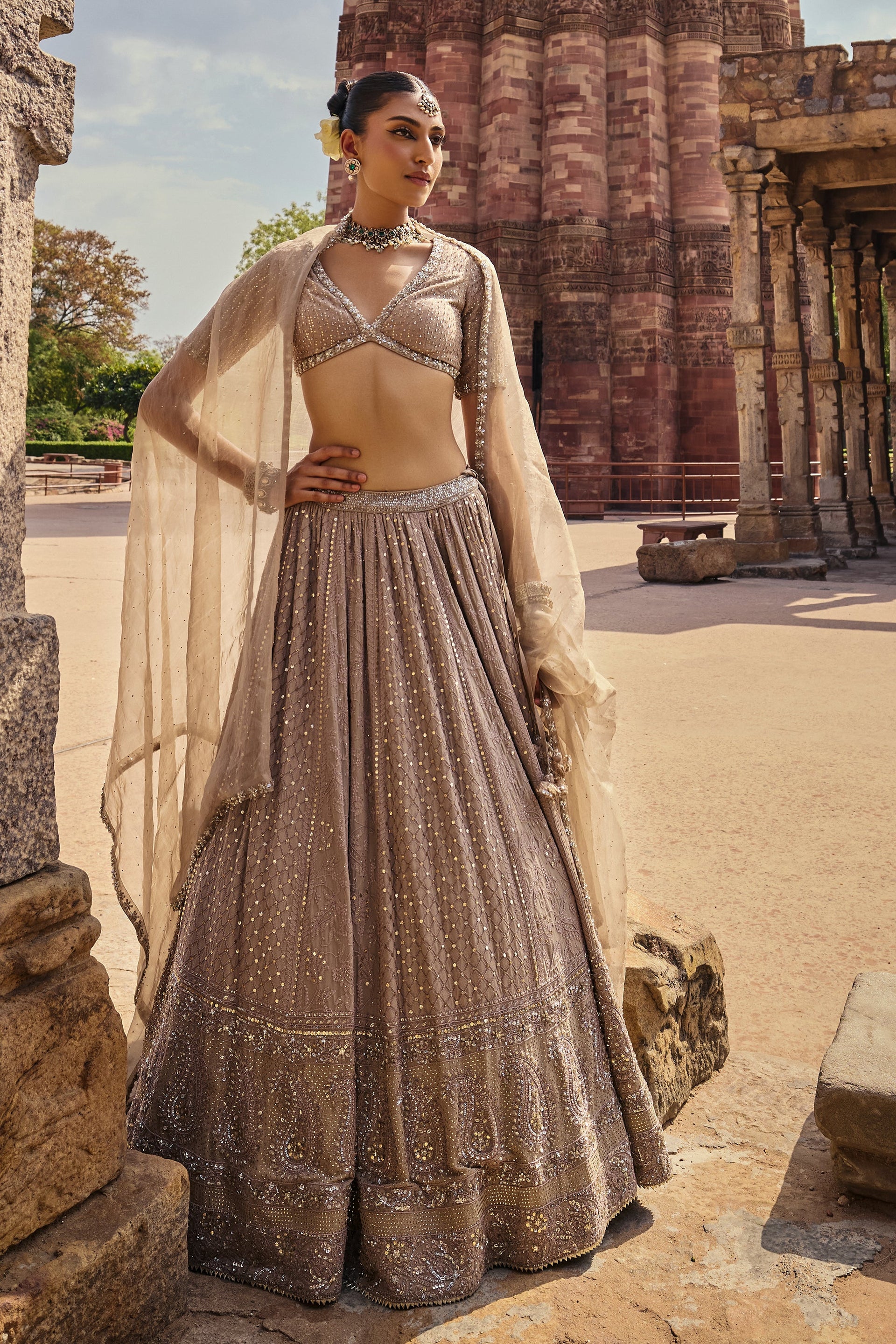
grey chikankari lehenga is the unconventional choice that is rapidly becoming the most talked-about one. It is for the bride who is not interested in wearing what everyone expects, who sees her wedding outfit as an extension of her own aesthetic rather than a performance of someone else's idea of bridal.
Paired with silver jewellery, grey chikankari is nothing short of extraordinary. The embroidery — typically in off-white or silver-grey thread — reads almost like watercolour on the base fabric, soft and painterly and utterly unlike anything else in the room.
How to Style It Without Overthinking
Chikankari does the heavy lifting for you. Keep the rest simple. Polki jewellery, fresh flowers in the hair, a sheer dupatta — that is all you need. The embroidery is intricate enough that layering it with loud accessories tends to work against it rather than with it.
The one thing worth spending time on is the blouse. A well-fitted blouse with a complementary neckline can transform the entire look. Talk to your tailor early, try multiple silhouettes, and do not settle.
Final Thought
The chikankari bridal lehenga is not a trend. It is not a moment. It is a choice that will look as beautiful in photographs thirty years from now as it does on the day itself — because it is not chasing anything. It is simply, quietly, perfectly itself.


